Mark Grabowski
  • About
  • Writing
  • Teaching
  • Research
  • Blockchain
  • Speaking
  • Press
  • Contact

Grabowski discusses China's online influence operations

6/24/2020

 
Picture
China's disinformation campaign on Western social media is a "far more menacing threat" than Russia's, Mark Grabowski told news outlets.

Earlier this month, Twitter revealed it suspended 175,000 Chinese propaganda accounts — 150x more than Russia.
Grabowski, who teaches cyber law and ethics, said China could exploit the anti-government sentiment held by many American academics, journalists, and lawmakers to propel anti-U.S. narratives.

“They provide the appearance of credibility and China simply provides the retweets and makes that narrative go viral,” he said in interviews this month with The Epoch Times and The Millennial Source.

He also warned about risks posed by TikTok, which is owned by the Beijing-based company ByteDance. The video sharing app, which has about 45 million American users, has seen a surge in popularity during the pandemic.

“By analyzing its treasure trove of data, China can gain all kinds of insights and leverage it to manipulate Americans,” Grabowski said. “With so many Americans practically living online now, especially during the lockdown, China understands American society very well and they know what buttons to push,” he added.


Grabowski opines on recent journalism controversies

6/19/2020

 
Picture
In his latest Washington Examiner column, Mark Grabowski tackled objectivity in journalism.

Newsrooms across the nation have experienced internal conflict as  many journalists have recently called to abolish the long-standing principle of reporting news objectively. They argue that President Trump's presidency coupled with the current tumult in the United States necessitates that journalists take a new approach.

But Grabowski, a former newspaper reporter who now teaches media ethics, warned that abandoning objectivity will only further hurt the press's declining reputation.

"Journalism’s long-standing principles did not fail; rather, journalists failed to adhere to them," he wrote. "As journalists abandoned those core values in favor of an alternative approach, public trust in the press declined."

Read his full column here.

Grabowski discusses smart phone hacking

6/19/2020

 
Picture
Mark Grabowski discussed with Coin Telegraph a growing cybersecurity risk for Bitcoin investors: SIM swaps.

Instead of hacking your computer, cyber criminals are now targeting your cell phone as it can be the key to your most important financial accounts. Several cryptocurrency investors have been targeted recently and, in some cases, lost millions of dollars.

“In addition to infecting smartphones with malware, criminals are illegally spoofing users’ phone numbers (faking the number that an incoming call is from), porting their numbers (moving the number from a user’s phone to another phone controlled by the criminal) and even cloning SIM cards, the computer chips that identify a phone, to access users’ data and steal money,” he told the crypto news site.

Grabowski, a professor who wrote a book on cryptocurrencies, said the Federal Communications Commission and wireless carriers must provide stronger protections for customers to truly lock down cell phone accounts.


Grabowski quoted on social media censorship

5/23/2020

 
Picture
Professor Mark Grabowski, who specializes in cyber law and ethics, was recently cited in several news stories on free speech controversies involving social media platforms.

In a May 21 story and May 26 story, he discussed the erosion of free speech on social media platforms like Twitter, Facebook and YouTube. “It’s becoming like Chinese-style censorship where dissident viewpoints and even certain words and phrases are forbidden," Grabowski told Epoch Times, a daily international newspaper with a circulation over 1 million. "And, while such censorship doesn’t violate the First Amendment, it isn’t keeping with the spirit of freedom of speech.”

In a May 27 story, he discussed Twitter's decision to fact-check President Trump's tweets. “I don’t want to see misinformation on social media but … how will Twitter ensure fairness and consistency?” Grabowski told Epoch Times. “Will this new policy apply to other politicians? Which ones? Will all tweets be fact-checked or just some? Who will determine the veracity of a tweet? Twitter has opened itself up for major headaches.”

Finally, in a June 3 story, he explained the impact of Trump's executive order stripping social media sites of legal protections provided by Section 230 of the Communications Decency Act.

"Trump’s executive order to end Section 230 protections doesn’t have any immediate effect,” Grabowski told financial news site Stash. “The Federal Communications Commission, which promulgates rules for the Telecommunications Act, must decide whether and how to implement Trump’s order in a way that’s compatible with the law. There is, perhaps, enough ambiguity and wiggle room in the law’s requirement that platforms act ‘in good faith’ that the FCC could make some changes to appease Trump.”

However, he added that the FCC appeared unlikely to make any changes and that doing so could jeopardize social media. “Without 230, the Internet we have today wouldn’t exist,” he said.


Grabowski addresses COVID-19 misinformation

4/29/2020

 
Picture
Should TV networks stop live airing President Trump's briefings on COVID-19?

Mark Grabowski tackled this controversy in his latest Washington Examiner column. He opposes a petition by journalism professors calling on networks to stop airing Trump's briefings over concerns of him spreading misinformation.

"
News flash: The public knows Trump lies," he wrote. "But they don’t need to be told that by the media, which ranks 16 points lower than the president in handling the crisis. Many of the same journalists who would filter Trump’s words have exacerbated the infodemic by spreading their share of misinformation about COVID-19.

"A CNN anchor was caught staging fake news about his quarantine. On multiple occasions, journalists have misrepresented Trump's statements related to the virus. No, he didn't call it a hoax or prescribe fish tank cleaner. That's why TV networks should show exactly what the president says, unedited, and let the public evaluate for themselves. In fact, networks have a duty to do so."

Grabowski, who teaches media law and ethics, also had his take cited in Tulsa Beacon column and a blog post by the Oklahoma City of Public Affairs' Center for Independent Journalism.


Prof. Grabowski wins Fulbright Award

2/26/2020

 
Picture
Mark Grabowski has received a Fulbright award to research Bitcoin in Asia.
 
Grabowski, an associate professor at Adelphi University in New York, will conduct research at Ateneo de Manila University’s blockchain lab during the Spring 2021 semester. The prestigious Fulbright Program provides U.S. government funding for students, professors and professionals to study, teach and research in 125 nations around the world.
 
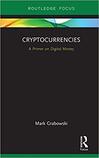
Grabowski specializes in cyber law and is author of Cryptocurrencies: A Primer on Digital Money, published by Routledge in 2019. In Philippines, he will conduct research on the impact of cryptocurrency regulations and what the United States — as well as other nations looking to implement cryptocurrency into their economy — can learn from them. The Southeast Asian nation has become a cryptocurrency mecca due to banking services being scarce but Bitcoins readily available in convenience stories.
 
“As U.S. lawmakers begin to develop their own comprehensive regulatory framework for cryptocurrency, they could learn from the Philippines, a nation that has a similar government structure, shares historical and cultural links, and has been a pioneer in cryptocurrency regulation,” explained Grabowski, who teaches a course on Bitcoin & Blockchain. “Having a shared vision for cryptocurrency regulation could encourage more U.S. investment in Philippines and also help strengthen diplomatic ties between the two English-speaking democracies."


Grabowski hosts panel on student journalism rights

2/26/2020

 
Picture
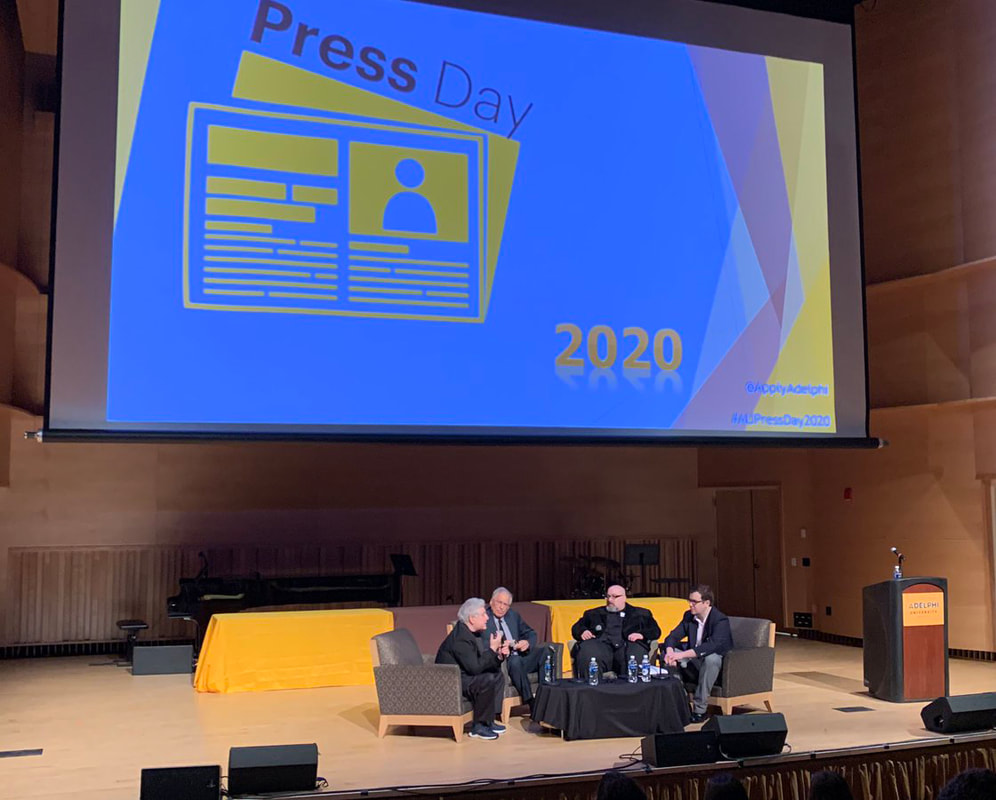
Mark Grabowski hosted a panel on student journalism rights.

The panel, held at Adelphi University as part of their 21st annual Press Day on Feb. 26, covered a range of legal and ethical issues affecting the scholastic press and high school journalists. The event attracted an audience of approximately 300 students from 25 Long Island high schools.

Topics covered included: censorship, Hazelwood, takedown requests, April Fools' newspapers, copyright, media ethics, Section 230, free speech wars on campuses and more. An attorney from The Foundation for Individual Rights in Education trekked up from Washington, D.C. to speak on the panel with Grabowski. The Adelphi University professor is a former journalist who teaches courses on media law and cyber law.

Grabowski discusses cryptocurrency scams

12/20/2019

 
Picture
In an interview with People Looker Blog, Mark Grabowski offered advice on investing in cryptocurrency, including how to avoid scams

“It takes a special investor who can deal with the extreme price fluctuations, prevalent scams, uncertain legal future and other risks associated with cryptocurrency,” said Grabowski, who teaches a course and wrote a book on Bitcoin and blockchain. “It also takes luck. Yes, there’s potential to make a lot of money quickly. But there’s also a good chance you could lose everything you invest.”

Read the full article here.

Grabowski's new book listed as best seller, top cryptocurrency book

9/18/2019

 
Picture
Mark Grabowski's new book on Bitcoin and blockchain, Cryptocurrencies: A Primer on Digital Money, was recently listed as one of the "Best New Cryptocurrency Technology Books To Read In 2019" by Book Authority.

In August, it cracked Amazon's Top 50 Sellers List for books on money.

The book, which serves as a primer on cryptocurrency, was published by Routledge in 2019. Grabowski is an associate professor at Adelphi University, where he teaches courses on cyber law and cryptocurrency.


Grabowski discusses Facebook's cryptocurrency Libra with CCN

9/3/2019

 
Picture
Mark Grabowski discussed Facebook's controversial new cryptocurrency known as Libra. He was quoted in a news story by CCN, a popular site for tech news, and in LeapRate, a site covering online trading.

A member of the European Central Bank recently warned about Libra, saying it's not decentralized like a bona fide cryptocurrency and would operate like an unregulated nation-state. Grabowski agreed: "Look at the way Libra is structured. It’s a complete contradiction to decentralization. Facebook can use all the cryptocurrency buzzwords they want, but it’s like putting lipstick on a pig."

Grabowski is a professor at Adelphi University, where he teaches courses on Cyber Law and Bitcoin & Blockchain. Additionally, he recently published a textbook on cryptocurrency with Routledge , titled Cryptocurrencies: A Primer on Digital Money.

<<Previous
Forward>>

    Archives

    January 2026
    December 2025
    November 2025
    January 2025
    September 2023
    May 2023
    January 2023
    May 2022
    February 2022
    January 2022
    December 2021
    November 2021
    October 2021
    August 2021
    June 2021
    January 2021
    December 2020
    October 2020
    September 2020
    August 2020
    June 2020
    May 2020
    April 2020
    February 2020
    December 2019
    September 2019
    August 2019
    July 2019
    May 2019
    April 2019
    March 2019
    January 2019
    October 2018
    August 2018
    July 2018
    June 2018
    August 2017
    July 2017
    June 2017
    April 2017
    March 2017
    February 2017
    January 2017
    December 2016
    November 2016
    October 2016
    September 2016
    June 2016
    April 2016
    March 2016
    January 2016
    June 2015
    April 2015
    February 2015
    January 2015
    November 2014
    October 2014
    August 2014
    February 2014
    December 2013
    October 2013
    March 2013
    December 2012
    November 2012

    RSS Feed

© 2026